Guide
Are golf rangefinders worth it?
Published
Note: This page contains affiliate links. If you buy through them we may earn a commission at no extra cost to you. Learn more
In short
For most golfers who play regularly, yes. A rangefinder gives an exact distance to the flag, which removes guesswork between clubs and speeds up decisions. The gain is biggest once you know how far each club carries. Beginners still benefit, but should first learn their own yardages on the range.
Products for this job
Compare all 7 productsShot Scope Pro L5: 7x zoom, OLED and cart magnet
Check price on AmazonAffiliate linkBushnell Tour V7 Shift: dual colour display, 1,300 yd
Check price on AmazonAffiliate linkNikon Coolshot 50i GII: magnet, Locked On Quake
Check price on AmazonAffiliate link
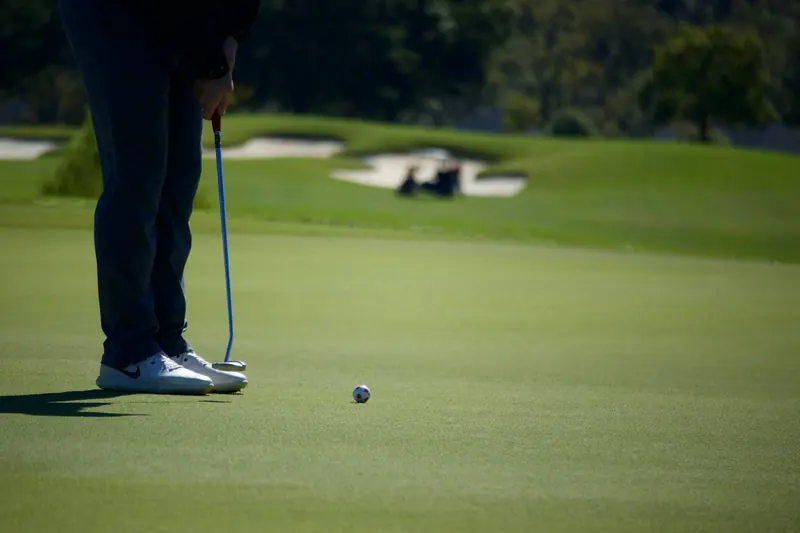
Rangefinders used to be a tour player's tool; now they are common in club golf. But is a laser really worth having, or is a sprinkler head and a guess good enough? The honest answer depends on how often you play, how consistent your strike is and whether you know your yardages. This explainer looks at what an exact number changes, who gains most, how a laser compares with a GPS watch, and which features matter at each level.
What an exact number changes
Most amateur golfers miss more greens short than long. Part of that is strike, but part is guessing the distance, especially to a flag at the back of a deep green. A course planner gives the middle of the green; the flag might be 10 or 15 yards away from that. A laser gives the distance to the flagstick itself, so you can choose between clubs on a real number rather than a hunch.
Speed is the second gain. Pacing from markers takes time and invites second-guessing. A laser reading takes a few seconds, which helps the pace of play your club and playing partners will appreciate.
Who gains the most
Higher handicappers still benefit, but the gain is less about precision and more about confidence and pace. If your 7 iron varies by 20 yards from shot to shot, a 2 yard accurate number will not change much. Spend an hour on a range or with a launch monitor learning your carry distances first; then the laser becomes much more useful.
- Regular golfers who know their carry distance with each club.
- Players with handicaps in single figures to the high teens, whose strike is consistent enough to use a precise number.
- Golfers at courses with big greens, hidden flags or few yardage markers.
- Anyone who plays lots of new courses, away days or holidays.
Laser or GPS watch?
A laser gives one exact number to whatever you aim at, including the flag. A GPS watch gives front, middle and back of the green and hazards without aiming, and works on blind shots. Many golfers find a watch quicker for most shots and a laser better for approach shots to a specific pin. Our GPS watch vs rangefinder comparison goes into detail; some golfers end up owning both.
A useful way to decide is to think about the shots that cost you most. If you often come up short of tucked flags or misjudge the gap between two clubs on approach shots, a laser targets that problem directly. If your bigger issue is blind tee shots, doglegs and hazards you cannot see, a watch or handheld GPS gives more help for the money. Golfers who carry their bag may prefer a watch, while trolley users can keep a laser on the frame with a magnet and reach it in a second.
Features that matter at each level
You do not need the most expensive model to get reliable numbers. Our mid-price rangefinder guide compares lasers from Shot Scope, Nikon, Bushnell and Voice Caddie on range, magnification and lock feedback. If you want the top models with dual colour displays, see the main rangefinder guide.
| Golfer | Priorities |
|---|---|
| New to lasers | Reliable flag lock with vibration, simple controls, light weight |
| Regular club golfer | Clear display in dull light, magnet for the trolley, good eyepiece focus |
| Hilly course or lots of social golf | Slope with an obvious on/off switch |
| Glasses wearer | Long eye relief and a dioptre adjustment |
Things a laser will not fix
A laser cannot tell you how the wind, the temperature or a soft, wet green will affect the shot, and slope readings must be off in competition. It also cannot fix a poor strike. Treat the number as one input alongside the lie, the wind and the shape of shot you want to play.
Battery and care matter too. A flat CR2 cell or uncharged battery on the first tee is a common frustration, so keep a spare or charge it the night before. Our article on rangefinder features covers batteries, magnets and displays.
Note:Makers describe golf lasers as eye-safe Class 1 devices in normal use but warn against looking at the sun through the optics or aiming at people. Read your manual.
Frequently asked questions
Do professionals use rangefinders? In many professional events distance devices are restricted by the conditions of competition, but caddies use them in practice rounds. In club golf they are allowed by default under Rule 4.3.
Is a rangefinder worth it for a beginner? It can help pace of play and confidence, but a beginner gains more by first learning how far each club goes on the range.
Is a cheaper laser accurate enough? Established brands at mid prices typically state accuracy of around a yard. The bigger differences are in lock speed, display and build.
What you need
- Check price on AmazonAffiliate link
Shot Scope Pro L5: 7x zoom, OLED, cart magnet
From: Best golf rangefinders
- Check price on AmazonAffiliate link
Garmin Approach S44: AMOLED, 15 h GPS, 43,000+ courses
From: Best golf GPS watches